
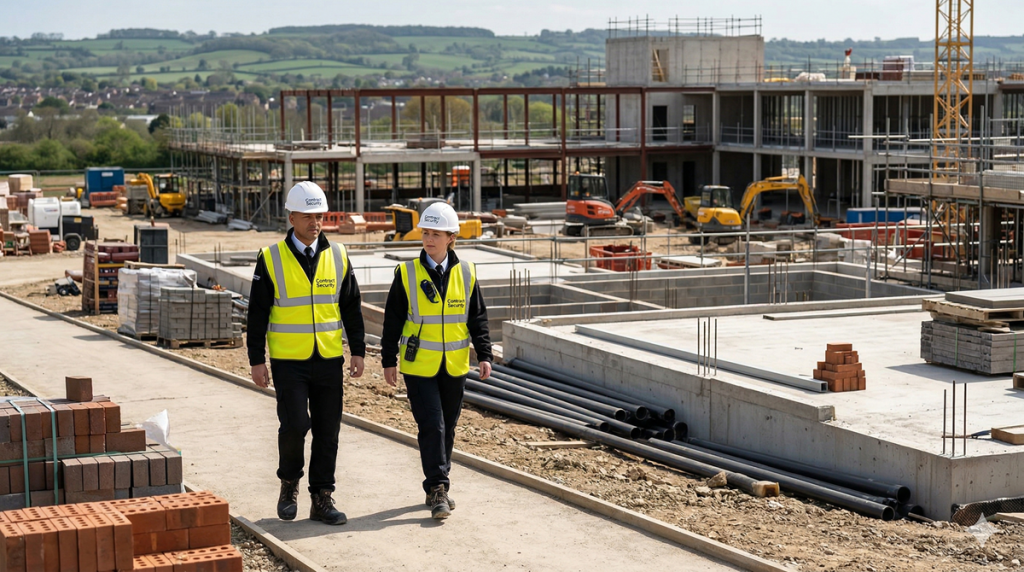
Managing a construction project in the Home Counties means juggling tight deadlines, complex supply chains, and millions of pounds in physical assets. But when the contractors clock out and the site goes quiet, those assets—from heavy plant machinery to high-value materials—become highly vulnerable targets.
Plant theft and site vandalism aren't just nuisance crimes; they are schedule-destroying events that eat directly into your profit margins and cause cascading delays across your build timeline. To protect your site, you need a security strategy as dynamic as the project itself.
The Vulnerability of the "Changing Perimeter"
Unlike a completed commercial building, a construction site is a living, breathing environment. The physical boundaries are in a constant state of flux. A secure, fenced-in perimeter on a Monday might need to be completely opened up by Thursday to allow for crane access or bulk material deliveries.
This constant evolution makes traditional, rigid security models largely ineffective. If your security protocols don't adapt to the changing footprint of your site, you inevitably create blind spots. Thieves who target construction sites are often highly organized; they scout these evolving weaknesses, waiting for the moment a perimeter is temporarily compromised. Securing a site requires a proactive approach that maps to your build schedule, ensuring that temporary breaches in physical barriers are immediately reinforced by human or technological oversight.
Controlling the Chaos: The Gatehouse Advantage
The greatest threat to your assets isn't always someone cutting a fence under the cover of darkness. Often, the highest risk occurs during the organized chaos of the working day. With dozens of contractors, delivery drivers, and site visitors coming and going, unauthorized access can easily go unnoticed.
This is where professional Gatehouse guards become an invaluable asset. A well-trained gatehouse team does far more than just lift a barrier; they act as the active managers of your site's logistics and first line of defense. Their core functions include:
-
Vetting and Logging: Ensuring every individual stepping onto the site has the correct authorization, induction, and PPE.
-
Delivery Management: Validating manifests to prevent the "Trojan Horse" tactic of unauthorized vehicles entering to scout or steal.
-
Visible Deterrence: A professional, authoritative presence at the main access point is often enough to deter opportunistic criminals from targeting your site in the first place.
Agile Protection: Scaling Security to the Build Phase
Because construction sites are temporary, investing in heavy, permanent security infrastructure rarely makes financial sense. Furthermore, your security risk profile changes dramatically throughout the project.
During the initial groundworks phase, the focus is heavily on securing large plant machinery. However, as you move into the first and second fix, the site suddenly fills with highly stealable, high-value goods: copper piping, boilers, white goods, and specialized tools.
The most effective security strategy is a flexible and scalable solution. Your security provider should work alongside your Project Managers to scale the physical presence up or down based on the build phase. This might mean starting with mobile patrols during early groundworks, escalating to full-time gatehouse management during peak construction, and implementing 24/7 static guarding during the critical fit-out stages.
Protect Your Timeline, Protect Your Margins
In the construction industry, time is money, and stolen equipment costs you both. By acknowledging the unique vulnerabilities of changing perimeters, utilizing gatehouse professionals to control daily access, and implementing a scalable security strategy, developers in the Home Counties can harden their sites against organized theft and ensure their projects cross the finish line on time and on budget.